Article Summary
A high temperature and high pressure cone dyeing machine is an essential piece of equipment for textile manufacturers that need consistent yarn coloration, efficient production, and reliable process control. By combining controlled heating, pressurized dye circulation, and carefully managed dyeing parameters, this equipment helps manufacturers process different yarn materials while maintaining color uniformity and product quality.
This guide explains how cone dyeing machines work, their major components, important performance characteristics, common production challenges, maintenance requirements, and the factors buyers should evaluate before purchasing industrial dyeing equipment.
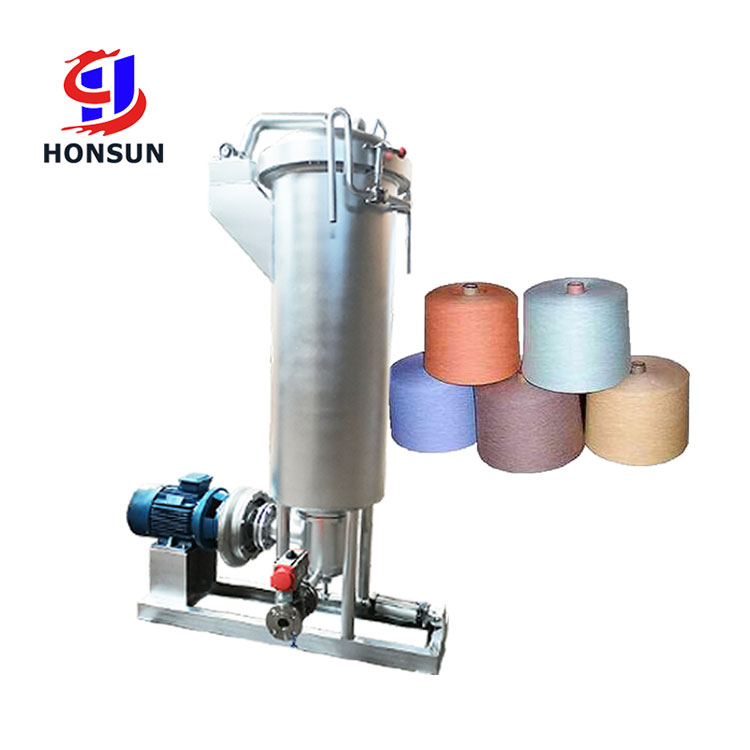
Table of Contents
- Understanding High Temperature and High Pressure Cone Dyeing Machines
- How Does the Cone Dyeing Process Work?
- Key Components and Their Functions
- Why Temperature and Pressure Control Matter
- Major Advantages for Textile Manufacturers
- Which Yarn Materials Can Be Processed?
- Common Dyeing Problems and Practical Solutions
- How to Choose the Right Cone Dyeing Machine
- Operation and Maintenance Recommendations
- Frequently Asked Questions
- Conclusion and Manufacturer Support
- Equipment fundamentals and industrial applications.
- Working principles and the complete dyeing workflow.
- Machine structure, circulation systems, and control technology.
- Production benefits and material compatibility.
- Solutions to uneven dyeing, color differences, and operational issues.
- Purchasing considerations, maintenance, and supplier evaluation.
1. Understanding High Temperature and High Pressure Cone Dyeing Machines
In modern textile manufacturing, yarn coloration is not simply a matter of applying dye to fibers. Manufacturers must achieve consistent shades, maintain stable physical properties, minimize production defects, and meet increasingly demanding delivery schedules. These requirements make reliable industrial dyeing equipment particularly important.
A High Temperature and High Pressure Cone Dyeing Machine is designed to dye yarn wound onto perforated cones or suitable yarn carriers. During the process, dye liquor circulates through the yarn packages under controlled temperature and pressure conditions. The circulation allows the dye solution to penetrate the yarn structure and distribute color throughout the package.
Unlike conventional atmospheric dyeing systems, high-temperature and high-pressure equipment operates in a sealed vessel. This makes it possible to process suitable synthetic and blended yarns at temperatures above the normal boiling point of water, depending on the machine design and dyeing recipe.
What Makes Cone Dyeing Different?
Cone dyeing is a package dyeing method. Yarn is wound onto perforated carriers, which are arranged on a spindle or package support system inside the dyeing vessel. The machine forces dye liquor through the yarn packages, allowing the colorant to reach the inner and outer sections of the wound yarn.
This method is particularly useful when manufacturers need to dye yarn before knitting, weaving, or other downstream textile processes.
2. How Does the Cone Dyeing Process Work?
Understanding the working process helps production managers identify potential quality issues and operate the equipment more efficiently. Although specific operating procedures vary by machine model and yarn type, a typical package dyeing process includes several stages.
Step 1: Yarn Package Preparation
Yarn is wound onto perforated dyeing cones or carriers. Package density and winding tension must be controlled because they directly affect the resistance of dye liquor flowing through the yarn.
Packages that are too compact may restrict circulation, while excessively loose packages may deform during processing. Consistent package preparation is therefore essential for achieving uniform results.
Step 2: Loading the Dyeing Vessel
Prepared yarn packages are mounted onto the machine's package holders or spindles. Operators should ensure that the packages are positioned correctly and that the circulation pathways are not obstructed.
Step 3: Filling and Liquor Circulation
Water and the required dyeing auxiliaries are introduced into the system according to the selected recipe. The circulation pump then moves dye liquor through the packages.
Depending on the machine configuration, liquor may circulate from the inside of the yarn packages toward the outside or in the reverse direction. Some systems support alternating flow to improve penetration and color distribution.
Step 4: Controlled Heating and Dye Absorption
The temperature gradually increases according to the dyeing program. Heating rates and holding times depend on the fiber composition, dye chemistry, shade requirements, and process specifications.
In high-temperature applications, the sealed vessel maintains the required pressure to prevent the dye liquor from boiling at the operating temperature.
Step 5: Holding, Cooling, and Washing
Once the target conditions are reached, the machine maintains the specified process parameters to allow dye absorption and fixation. After the dyeing stage, controlled cooling and subsequent washing or rinsing help remove unfixed dye and residual chemicals.
Step 6: Unloading and Quality Inspection
The dyed packages are unloaded and inspected. Quality checks may include shade comparison, color consistency, package appearance, and tests relevant to the intended downstream application.
3. Key Components and Their Functions
A reliable cone dyeing machine consists of several coordinated systems. Understanding their functions helps buyers assess machine configuration and identify which technical features are important for their production requirements.
| Component | Main Function | What Buyers Should Check |
|---|---|---|
| Dyeing Vessel | Contains yarn packages and dye liquor under controlled operating conditions. | Material quality, design pressure, corrosion resistance, and safety certification. |
| Circulation Pump | Moves dye liquor through the yarn packages. | Flow stability, capacity, and compatibility with package resistance. |
| Heat Exchange System | Raises or lowers dye liquor temperature. | Heating efficiency, temperature stability, and cooling performance. |
| Package Holders | Support yarn cones and maintain suitable circulation pathways. | Package capacity, structural strength, and loading convenience. |
| Control System | Manages temperature, time, pressure, and process sequences. | Programming flexibility, monitoring accuracy, and operator interface. |
| Valves and Pipelines | Control fluid movement, filling, drainage, and process connections. | Leak resistance, material compatibility, and maintenance accessibility. |
| Safety Protection System | Helps protect operators and equipment during pressurized operation. | Pressure monitoring, interlocks, relief devices, and applicable safety compliance. |
The Importance of the Circulation System
The circulation system is one of the most important factors affecting package dyeing performance. Dye liquor must pass through the yarn packages with sufficient and appropriately controlled flow. Poor circulation can result in uneven penetration, inconsistent shades, or differences between package positions.
A suitable circulation design should consider the yarn count, package dimensions, winding density, dye liquor properties, and production load. Simply increasing pump power does not necessarily improve dyeing quality, because excessive flow may also affect package stability.
Why the Control System Matters
Modern industrial dyeing operations require repeatable processes. A programmable control system helps operators establish temperature curves, process times, and other operating parameters. Depending on the machine configuration, automated monitoring and alarm functions can also help identify abnormal operating conditions.
4. Why Temperature and Pressure Control Matter
Temperature and pressure are closely related in high-temperature dyeing. The sealed vessel allows the dye liquor to remain liquid at elevated temperatures, making it possible to process certain synthetic fibers under conditions that are not achievable in ordinary atmospheric dyeing equipment.
Temperature Influences Dye Absorption
Temperature affects fiber swelling, molecular movement, dye diffusion, and the rate of dye absorption. For polyester yarn, for example, high-temperature dyeing with appropriate disperse dyes helps achieve effective coloration.
However, higher temperatures are not automatically better. Excessive heating rates, unsuitable holding temperatures, or incorrect cooling procedures can lead to shade variation, material damage, or unnecessary energy consumption.
Pressure Supports High-Temperature Operation
Pressure is necessary to maintain the liquid state of the dye liquor when operating above the atmospheric boiling point of water. The required pressure depends on the operating temperature and the machine's engineering design.
It is important to distinguish between normal operating pressure and the maximum allowable working pressure. Buyers should confirm the equipment's rated pressure, applicable design standards, safety devices, and inspection requirements before purchasing.
Process Parameters Must Work Together
Consistent dyeing performance requires coordination among temperature, pressure, liquor circulation, pH, dye concentration, and processing time.
| Parameter | Influence on Dyeing | Management Priority |
|---|---|---|
| Temperature | Affects dye diffusion and absorption. | Follow the material-specific recipe and controlled heating curve. |
| Pressure | Supports liquid-phase operation at elevated temperatures. | Remain within approved equipment operating limits. |
| Liquor Circulation | Influences dye distribution through yarn packages. | Maintain suitable and stable flow. |
| Processing Time | Determines the duration available for dye absorption and fixation. | Use validated recipes and avoid unnecessary holding. |
| Liquor Ratio | Influences dye concentration and resource consumption. | Follow the process specification and machine design. |
5. Major Advantages for Textile Manufacturers
Selecting an appropriate high-temperature and high-pressure cone dyeing machine can improve several aspects of textile production. The actual benefits depend on the equipment configuration, production conditions, and operator experience.
5.1 Improved Color Uniformity
Properly designed liquor circulation helps distribute dye solution through the yarn packages. When package density and processing parameters are controlled, manufacturers can reduce differences between the inner and outer layers of yarn packages.
5.2 Suitable for High-Temperature Synthetic Yarn Dyeing
The pressurized operating environment makes this equipment suitable for dyeing polyester and other compatible synthetic yarns that require elevated processing temperatures. This gives manufacturers greater flexibility when handling different yarn specifications.
5.3 Repeatable Production Processes
Programmable dyeing recipes help standardize production conditions. Operators can reuse validated process settings for repeat orders, reducing dependence on manual adjustments and improving batch-to-batch consistency.
5.4 Better Production Planning
Appropriate loading capacity and automated process control can help manufacturers organize production schedules more efficiently. A suitable machine can support different order sizes while maintaining consistent process management.
5.5 Potential Resource Savings
Depending on the machine design, insulation, heat recovery options, liquor ratio, and process optimization, manufacturers may reduce water, steam, electricity, and chemical consumption.
Buyers should request actual consumption data under comparable operating conditions rather than relying solely on general efficiency claims.
5.6 Greater Production Flexibility
With suitable process recipes and machine configurations, package dyeing equipment can support different yarn counts, package sizes, and color requirements. This is particularly valuable for factories serving multiple textile markets.
6. Which Yarn Materials Can Be Processed?
A high temperature and high pressure cone dyeing machine can process various yarn materials when the machine configuration, dye chemistry, and operating recipe are appropriate. Different fibers have different temperature requirements and dye absorption characteristics.
Polyester Yarn
Polyester is one of the major applications for high-temperature package dyeing. It is commonly dyed using disperse dyes under controlled high-temperature conditions. Proper temperature programming and circulation are important for achieving consistent shades and penetration.
Nylon Yarn
Nylon yarn can be dyed using suitable acid dyes or other compatible dye systems. Its dyeing behavior differs from polyester, so process temperature, pH, dye selection, and fixation conditions must be adjusted accordingly.
Blended Yarns
Some blended yarns can be processed using appropriate multi-stage or specialized dyeing recipes. However, the different fiber components may absorb dyes differently. Manufacturers should conduct laboratory trials before confirming full-scale production parameters.
Other Synthetic and Specialized Yarns
Depending on equipment design and process compatibility, certain other synthetic yarns and specialized materials may also be processed. Buyers should confirm material compatibility with the equipment supplier before placing an order.
| Yarn Type | Typical Dye System | Important Considerations |
|---|---|---|
| Polyester | Disperse dyes | Temperature profile, dispersion stability, and package circulation. |
| Nylon | Acid dyes or compatible alternatives | pH control, dye affinity, and shade uniformity. |
| Polyester Blends | Material-specific dye combinations | Different fiber components may require separate processing stages. |
| Other Synthetic Yarns | Depends on fiber chemistry | Confirm thermal stability and dye compatibility before production. |
Cotton and other cellulosic yarns generally require different dyeing conditions from high-temperature polyester processing. Although some equipment configurations may support broader applications, buyers should never assume that every cone dyeing machine is suitable for every fiber type.
7. Common Dyeing Problems and Practical Solutions
Even advanced dyeing equipment can produce inconsistent results when process conditions are not properly managed. Understanding common problems allows operators to identify root causes instead of repeatedly adjusting recipes without a clear diagnosis.
Problem 1: Uneven Color Between Inner and Outer Yarn Layers
Possible causes:
- Uneven yarn package density.
- Insufficient or unstable liquor circulation.
- Incorrect package loading or sealing.
- Unsuitable circulation direction or flow settings.
Practical solutions:
- Standardize yarn winding tension and package density.
- Inspect circulation pathways and filters.
- Check pump performance and pressure differences.
- Verify package positioning before starting each batch.
Problem 2: Batch-to-Batch Color Differences
Possible causes:
- Variations in raw yarn characteristics.
- Inconsistent dye and auxiliary dosing.
- Different heating rates or holding times.
- Changes in water quality or pH.
Practical solutions:
- Use standardized laboratory-approved dye recipes.
- Check dosing accuracy and chemical preparation.
- Record and compare actual temperature curves.
- Control water quality and maintain consistent operating procedures.
Problem 3: Poor Dye Penetration
Possible causes:
- Overly compact yarn packages.
- Unsuitable package dimensions.
- Blocked filters or circulation passages.
- Incorrect dyeing conditions for the yarn material.
Practical solutions:
- Optimize package winding density.
- Verify package dimensions against machine specifications.
- Clean circulation components regularly.
- Review the dyeing recipe with technical personnel.
Problem 4: Excessive Production Costs
Possible causes:
- Unnecessary heating and holding time.
- High water or steam consumption.
- Frequent re-dyeing caused by quality problems.
- Poor equipment insulation or maintenance.
Practical solutions:
- Analyze energy and water consumption per kilogram of yarn.
- Optimize validated temperature curves.
- Reduce avoidable production defects.
- Maintain heat exchange and insulation systems.
8. How to Choose the Right Cone Dyeing Machine
Purchasing industrial dyeing equipment is a long-term investment. A machine that looks attractive because of its capacity or maximum operating temperature may not be the best choice for a factory's actual production requirements.
8.1 Determine Your Production Capacity
Start by estimating daily and monthly yarn production. Consider the number of batches, average batch weight, product mix, and future expansion plans.
The selected machine should provide sufficient working capacity without creating unnecessary investment or inefficient loading.
8.2 Confirm Yarn Compatibility
Provide the supplier with detailed information about the yarn materials, yarn counts, package dimensions, and expected dyeing processes. This allows the manufacturer to recommend an appropriate machine configuration.
8.3 Evaluate Temperature and Pressure Specifications
Confirm the maximum allowable working pressure, normal operating temperature range, heating system, cooling method, and relevant safety protection features.
Make sure the equipment specifications match your intended dyeing recipes and comply with the regulations applicable to the installation location.
8.4 Check Liquor Circulation Performance
Ask the supplier how the machine handles different yarn package densities and whether the circulation system supports suitable flow adjustment or alternating circulation.
Practical performance under representative production conditions is more meaningful than pump specifications alone.
8.5 Review Automation and Control Functions
A user-friendly control system can simplify operation and improve process repeatability. Buyers should examine recipe storage, temperature monitoring, alarm functions, data recording, and available automation options.
8.6 Calculate Total Ownership Cost
The purchase price is only one part of the investment. Consider energy consumption, water use, installation, maintenance, spare parts, operator training, and after-sales support.
8.7 Evaluate Manufacturer Experience and Service
An experienced equipment supplier should be able to explain machine configuration, application limitations, operating requirements, and maintenance procedures.
Before purchasing, request technical documentation, equipment specifications, applicable certifications, reference installations where available, and details about warranty and technical assistance.
| Purchasing Factor | Questions to Ask the Supplier |
|---|---|
| Capacity | What is the working capacity per batch, and how many packages can be loaded? |
| Material Compatibility | Which yarn materials and package specifications can the machine process? |
| Operating Conditions | What are the rated temperature and maximum allowable working pressure? |
| Circulation | How is liquor circulation controlled and adjusted? |
| Automation | Can the control system store recipes and monitor operating parameters? |
| Energy Consumption | Can the supplier provide consumption data under comparable conditions? |
| After-Sales Service | Are installation guidance, spare parts, training, and technical support available? |
9. Operation and Maintenance Recommendations
Proper maintenance is essential for maintaining stable equipment performance, reducing unexpected downtime, and extending machine service life. A structured maintenance schedule also helps identify small problems before they become expensive production interruptions.
Daily Inspection
- Check the vessel, valves, and pipeline connections for visible leakage.
- Inspect pressure and temperature readings during operation.
- Check circulation pump operation and abnormal noise.
- Confirm that safety interlocks and alarms function as intended.
- Clean accessible filters according to the operating instructions.
Periodic Maintenance
- Inspect pump seals, bearings, and other wear components.
- Check the condition of valves and pipeline connections.
- Verify temperature and pressure instrument accuracy.
- Inspect heating and heat exchange components.
- Review electrical connections and control system operation.
Long-Term Equipment Management
Manufacturers should maintain detailed equipment records, including service history, component replacement, calibration, operating hours, and unusual operating conditions.
Pressure vessels and their safety accessories require inspection and maintenance according to the applicable regulations, manufacturer instructions, and qualified technical procedures. Never bypass safety devices or open a pressurized vessel.
10. Frequently Asked Questions
Q1: What is a high temperature and high pressure cone dyeing machine used for?
It is primarily used for dyeing yarn wound onto perforated cones or package carriers. It is commonly applied in synthetic yarn processing, particularly polyester dyeing, where controlled high-temperature and pressurized conditions are required.
Q2: How does a cone dyeing machine achieve uniform dyeing?
It circulates dye liquor through yarn packages under controlled process conditions. Proper package winding density, circulation flow, temperature management, and dye formulation all contribute to uniform color distribution.
Q3: Why is high pressure necessary in cone dyeing?
Pressure allows dye liquor to remain in a liquid state at temperatures above the atmospheric boiling point of water. This is important for processing certain synthetic yarns under high-temperature dyeing conditions.
Q4: Can a high-pressure cone dyeing machine process polyester yarn?
Yes. Polyester is one of the common applications. It is generally processed using suitable disperse dyes under controlled high-temperature conditions. The exact operating recipe depends on yarn specifications and dye chemistry.
Q5: Can the same machine dye different yarn materials?
Many machines can accommodate multiple compatible yarn types, but not every material can be processed using the same recipe. Buyers should confirm the machine's application range and conduct material-specific dyeing trials.
Q6: What causes uneven dyeing in yarn packages?
Common causes include inconsistent package density, insufficient circulation, blocked filters, unsuitable process parameters, and variations in raw materials. A systematic inspection of both equipment and dyeing conditions helps identify the cause.
Q7: What factors affect the production capacity of a cone dyeing machine?
Important factors include the number and size of yarn packages, working batch capacity, liquor circulation performance, heating and cooling time, dyeing recipe, and loading and unloading efficiency.
Q8: Is an automatic control system necessary?
An automatic control system is highly useful for industrial production. It helps manage temperature curves, processing time, and other operating parameters while supporting more repeatable production. The required automation level depends on factory scale and process complexity.
Q9: How can manufacturers reduce the operating cost of cone dyeing equipment?
Manufacturers can review liquor ratios, optimize validated heating programs, maintain heat exchange components, prevent avoidable re-dyeing, and improve water and energy management. Actual savings depend on equipment configuration and factory operating conditions.
Q10: What should buyers request before ordering a cone dyeing machine?
Buyers should request detailed technical specifications, working capacity, temperature and pressure ratings, material compatibility information, circulation system details, energy consumption data, safety documentation, warranty terms, and after-sales service information.
11. Conclusion: Building More Reliable Yarn Dyeing Production
A high temperature and high pressure cone dyeing machine plays an important role in modern yarn dyeing operations. Its ability to process suitable yarn materials under controlled temperature and pressure conditions makes it a valuable solution for textile manufacturers seeking stable coloration, consistent product quality, and efficient production management.
However, excellent dyeing results depend on the complete production system rather than one individual machine specification. Vessel design, liquor circulation, package preparation, heating performance, control accuracy, and operator procedures must work together to achieve reliable results.
For buyers, the most effective purchasing approach is to evaluate actual production requirements, confirm material compatibility, compare technical configurations, and choose a supplier that can provide dependable technical assistance throughout the equipment's service life.
Looking for a Reliable Cone Dyeing Machine Manufacturer?
Shishi Hongshun Printing and Dyeing Machinery Co., Ltd. is dedicated to providing printing and dyeing machinery solutions for textile manufacturing applications.
Whether you are planning a new dyeing production line, upgrading existing equipment, or looking for a suitable high temperature and high pressure cone dyeing machine, selecting the right configuration is the first step toward better production performance.
Contact us today to discuss your yarn specifications, production capacity, technical requirements, and equipment needs. Our team can help you explore suitable machinery solutions for your business.
Contact Us