- English
- Español
- Português
- русский
- Français
- 日本語
- Deutsch
- tiếng Việt
- Italiano
- Nederlands
- ภาษาไทย
- Polski
- 한국어
- Svenska
- magyar
- Malay
- বাংলা ভাষার
- Dansk
- Suomi
- हिन्दी
- Pilipino
- Türkçe
- Gaeilge
- العربية
- Indonesia
- Norsk
- تمل
- český
- ελληνικά
- український
- Javanese
- فارسی
- தமிழ்
- తెలుగు
- नेपाली
- Burmese
- български
- ລາວ
- Latine
- Қазақша
- Euskal
- Azərbaycan
- Slovenský jazyk
- Македонски
- Lietuvos
- Eesti Keel
- Română
- Slovenski
- मराठी
- Srpski језик

Can a Jigger Dyeing Machine Handle Delicate Silk Without Damaging It?
For over a decade, HONGSHUN has refined the Jigger Dyeing Machine to answer a common textile question: can it safely process fragile silk without causing harm?
Silk dyers often worry about mechanical stress, high temperatures, and uneven color uptake. This article explores how modern dyeing machine designs balance fabric protection with brilliant, consistent results—without relying on aggressive conditions.
Why Silk Poses a Unique Challenge for Dyeing
Silk is a protein fiber, much like human hair. It is strong when dry but surprisingly delicate when wet or heated. Traditional dyeing methods that work for cotton or polyester can easily damage silk's natural luster, cause streaks, or even shrink the fabric.
Common problems in silk dyeing include:
- Water marks from uneven liquor flow
- Fiber weakening from excessive tension
- Uneven shades due to poor dye penetration
- Loss of hand-feel
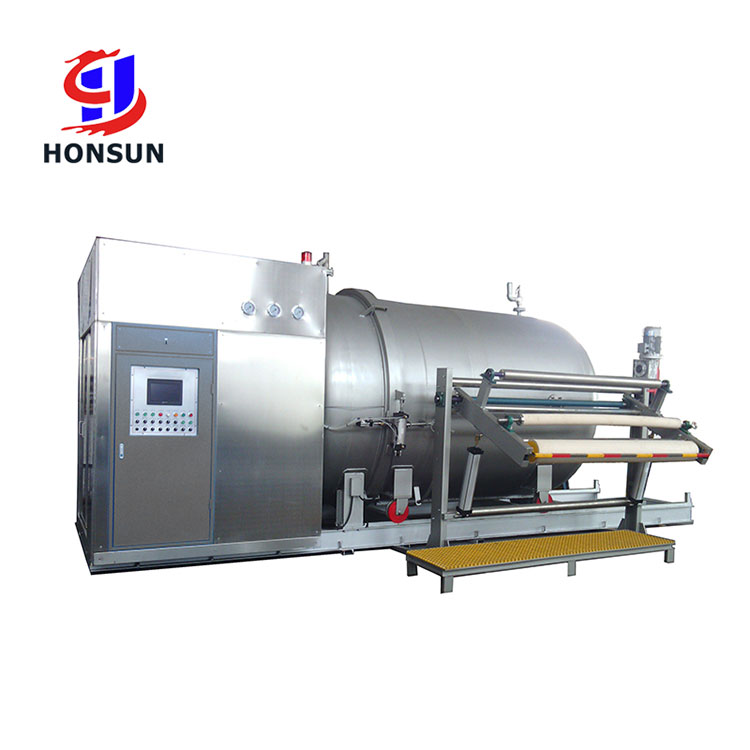
How the Dyeing Machine Works
Imagine two rollers—one unwinding fabric, the other winding it up. The fabric passes through a shallow dye bath at the bottom. That's the basic idea of a jigger. Unlike jet or overflow machines that toss fabric around in high-pressure streams, a jigger moves the fabric smoothly from roller to roller.
| Feature | How It Works | Benefit for Silk |
| Low fabric tension | Precise speed control | No stretching or tears |
| Shallow dye bath | Fabric dips then squeezes | Gentle contact |
| Open-width processing | No rope marks | Uniform finish |
| Optional heating | Controlled temperature up to 98°C (normal pressure) | Safe for protein fibers |
For silk, the normal temperature and normal pressure the dyeing machine is often the better choice. It operates close to natural conditions, using reactive or acid dyes that bond with silk fibers without requiring extreme heat.
The room-temperature jigger allows silk to retain its natural elasticity and sheen. It's like a gentle bath rather than a power wash.
High Temperature vs. Normal Pressure: Which Suits Silk?
Here is where many operators get confused. The dyeing machine family includes both normal temperature/pressure models and high temperature/high pressure models.
- High temperature & high pressure jigger (up to 130°C+): Designed for synthetic fibers like polyester. Uses disperse dyes. Can darken colors fast but will ruin silk—high heat denatures silk proteins, making fabric brittle and yellowed.
- Normal temperature & normal pressure jigger (around 95°C max, atmospheric pressure): Ideal for natural fibers: cotton, linen, and silk. Works with reactive or acid dyes at lower temperatures, preserving the fabric's original softness and texture.
Bottom line: Yes, a jigger dyeing machine can handle silk beautifully—if it is the correct type (normal pressure) and operated with proper dye chemistry and tension settings.
Real-World Silk Dyeing Process on a Jigger Machine
Let's walk through a typical silk dyeing cycle using a normal-temperature jigger. This is not theory; it's how many dyers actually work.
Step 1: Preparing the Dye Liquor
The operator mixes acid dyes (preferred for silk) or selected reactive dyes in the dye tank. Temperature is set to 40–60°C initially. pH is carefully adjusted to around 4.5–5.5, which is slightly acidic—perfect for silk fiber bonding.
Step 2: Fabric Loading
Silk fabric, in open-width form, is mounted on the unwinding roller. The leader tape helps thread the silk through the bath and onto the take-up roller. Tension is set to the lowest practical level—many modern jiggers have digital tension readouts to avoid over-pulling.
Step 3: Dyeing Cycle
The fabric runs forward through the dye bath, then reverses, passing back through. Each pass is one cycle. For silk, 4 to 8 cycles are typical, depending on depth of shade. The dye liquor circulates continuously, keeping temperature and pH stable.
Step 4: Squeezing and Penetration
Between dips, rubber squeeze rollers remove excess liquor, then the fabric re-enters the bath. This gentle action encourages dye molecules to migrate into the fiber without mechanical beating.
Step 5: Temperature Ramp (if needed)
For some acid dyes, temperature may be raised gradually to 85–90°C for fixation, then cooled. The jigger's temperature control system ensures this ramp is slow and even—no thermal shock to the delicate silk.
Step 6: Washing Off
After dyeing, the jigger can run clear water washes to remove unfixed dye. The passive reels collect the finished silk, ready for drying.
Result: Level color, high color fastness, and a soft handle that still feels like silk.
Why Silk Dyers Are Switching Back to Jigger Machines
For decades, many believed that only soft-flow or air-dye machines could handle silk safely. But those machines use high water consumption and forceful fabric movement. In recent years, experienced dyers have rediscovered the jigger dyeing machine for three compelling reasons:
1. No Rope Marks
In jet machines, silk twists into a rope and circulates at high speed. Friction against the tube walls creates permanent creases. Jigger keeps fabric open-width—no twisting, no creasing.
2. Lower Water and Energy Use
Jigger machines use a small liquor ratio. Less water means less heating, less dye waste, and shorter cycle times. For a silk dyer concerned about both cost and environmental impact, this is a major win.
3. Predictable Tension Control
Modern jigger models from established engineering teams include programmable control that adjusts motor torque in real time. The fabric never experiences sudden jerks or slack folds.
One production manager at a heritage silk mill in Suzhou noted: "We switched back to jiggers for our heavier silk chiffons. The quality improved overnight—no more water marks, and our re-dye rate dropped by 60%."
Potential Risks and How to Avoid Them
No machine is perfect. If an operator sets the dyeing machine incorrectly, silk can still be damaged. Here are the real risks and simple fixes:
| Risk | Cause | Prevention |
| Edge curling | Too much tension or worn felt guides | Use spreading rollers; check felt condition |
| Uneven sides | Fabric shifting on roller | Maintain precise winding alignment |
| Heat damage | Using high-pressure machine on silk | Never use HT jigger for silk—use normal pressure only |
| Dye streaks | Uneven squeezing | Calibrate rubber rollers weekly |
| Color fading | pH too high or low | Monitor with pH meter; add acid or buffer |
With a well-maintained jigger and trained staff, these risks are minimal. Many silk dyers report defect rates below 2% on jigger-dyed goods.
Comparison: Jigger vs. Other Dyeing Methods for Silk
| Method | Silk Safety | Water Use | Typical Defects | |
| Jigger (normal pressure) | High | Low | Rare if tension correct | |
| Jet / Overflow | Medium | High | Rope marks, chafing | |
| Air-dye | Medium-high | Very low | High equipment cost | |
| Winch | Low | High | Uneven color, fabric distortion | |
| Pad-dry (continuous) | Medium | Medium | Not for small batches |
For small to medium silk batches, the dyeing machine remains one of the safest, most efficient choices available.
What HONGSHUN Brings to Silk Dyeing
HONGSHUN has spent the past decade engineering jigger machines specifically with delicate fabrics in mind. Their normal-temperature, normal-pressure models include:
- Precision tension sensors – automatically reduce motor speed if fabric strain exceeds a preset threshold.
- Stainless steel dye tanks with integrated heating/cooling coils – even temperature distribution.
- User-friendly control panel – stores recipes for different silk types.
- Easy-clean design – quick switchover between dye colors without cross-contamination.
Their technical team also provides on-site training for operators, covering topics like how to set dwell time for thick silk or why slow reverse acceleration prevents edge marks.
A Reliable Solution for Delicate Fibers
The answer to the headline question is a clear yes—a normal-temperature, normal-pressure jigger can handle delicate silk without damage when operated with correct tension, pH, and dye chemistry. Silk dyers around the world are rediscovering this machine for its gentle fabric transport, low water consumption, and excellent color uniformity.
For those seeking dependable equipment backed by technical expertise, the high temperature and high pressure jigger dyeing machine for synthetics and the normal temperature jigger for silk and cotton from HONGSHUN offer proven performance. Whether upgrading an existing line or equipping a new workshop, their solutions focus on protecting the fabric while delivering vivid, fast colors.